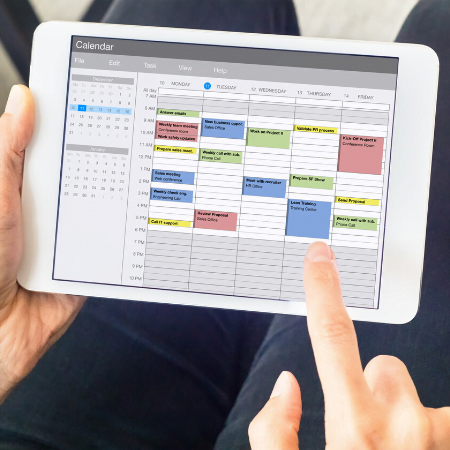
One of the most foundational tools in a grant professional’s toolkit is one that many organizations still don’t have in place: a grant calendar. Let’s make sure we start with what a grant calendar is — and is not.
What a Grant Calendar Is NOT
- An entry for each upcoming deadline on your own personal calendar
- Something set in stone, or a limitation on which opportunities you can pursue
What a Grant Calendar IS
A grant calendar is a shared, living document managed by the lead grant professional and accessible to the entire grant team. It is not just a list of application deadlines — it is a strategic planning tool for your organization’s full grant seeking activity across the year.
A well-built grant calendar includes:
Application deadlines — for all grant opportunities your organization plans to pursue, including private foundation, local and state government, and federal grants.
Key research and relationship dates — funder webinars, conferences, pre-application Q&A sessions, and other touchpoints that happen before an application opens.
Grantmaker relationship activities — outreach calls, site visits, check-in communications with current funders, and stewardship touchpoints throughout the year.
Grant management deadlines — report due dates, billing deadlines, and compliance milestones for awards already received.
Technology that works for your team — whether that’s Google Calendar, Microsoft Outlook, a shared Excel file, or a grant management platform, the right tool is the one your whole team will actually use.
Why a Grant Calendar Is a Strategic Tool, Not Just a Tracker
The most important function of a grant calendar is not looking backward at what is due — it is looking forward at what is possible. A well-maintained grant calendar serves as a guide for your proactive grant seeking strategy for the year ahead, helping your team set realistic goals, pace applications to avoid burnout, and ensure that every opportunity you pursue has been thoughtfully chosen.
Whether your fiscal year starts on July 1 or aligns with the calendar year, you should always have an eye on your grant calendar as a rolling, living document. Revisit and update it regularly throughout the year — not just at the start of a new budget cycle.
Download our free Grant Research Guide — it includes a grant calendar facilitation process and template to help you build and maintain a calendar that supports your full grant seeking strategy.
Free Resources to Help You Build and Use a Grant Calendar
- Grant Research Guide + Grant Calendar Template — includes a facilitation process and template to get your calendar in place
- What Is a Grant Team? — understand who should have access to and ownership of the grant calendar
- How Many Grant Proposals Can a Grant Professional Write Per Year? — use your calendar strategically to plan a realistic, sustainable volume of applications
- Grant Readiness Guide — assess whether your organization is ready to execute the plan your calendar lays out
Are you new to building a shared grant calendar? What tips or tools have worked for your team? Share your experiences in the comments or on social media using #granttips.
This blog has been updated on 3/17/2026
Pingback:Why Is March Grants-Mageddon? – Funding Finders
Pingback:Grant Readiness Challenge: Day 4: Check Your Grant Attachments
Pingback:Grant Calendar Versus Grant Strategy - DH Leonard Consulting & Grant Writing Services
Hi,
I appreciate the grant calendar discussion. I’ve started a new job writing grants for an engineering and land surveying company that works with local villages to apply for state and federal funds for public infrastructure projects. As you can imagine the grant applications and supporting documents required make a rather complicated calendar to compile a completed grant packet.
The article from Nonprofit About.com outlining 9 Steps to Create a Grant Calendar is no longer available. Are you aware of any other good grant calendar resources? I’ve downloaded and shared your Grant Calendar Action Guide with my coworker.
Thanks for all the awesome info!